Translate

Thursday, June 9, 2016

The Sony A7R2 And Tamron 150-600mm F5-6.3


Dale Matson

Click On Photographs To Enlarge
Sony A7R2 With Tamron 150-600 lens

I am primarily a mountain landscape photographer. This generally does not require a super telephoto lens but I also have been attempting to photograph the endangered Sierra Nevada Bighorn Sheep for a few years and have gone from the Sony G 70-200mm lens to the Canon 100-400mm lens and to the Sony G SAL 70-400mm lens. I have even carried the Canon lens over Baxter Pass (elevation 12,300’) on the chance that I might see the sheep.

This spring I had an opportunity to go on a field trip co-sponsored by the Sierra Nevada Bighorn Sheep Foundation and the California Department of Fish and Wildlife. The leaders were able to put us directly below the sheep but they were high above us and could only be seen with binoculars or spotting scopes. Needless to say, even a cropped photograph with my Sony lens was too small and unsatisfactory. After two more attempts it became obvious to me that I needed a lens with more reach.

I went with the Canon-Tamron lens adapted to my Sony A7R2 with the Viltrox EF-NEXII adapter. I have taken this lens on day hikes but weighing 5.5 lbs. inside a protective case this lens will never be a part of my backpacking experiences. It weighs more than my tent and sleeping bag combined!

I want to discuss my experiences with the lens on the Sony Camera. The adapter does allow for autofocus and it can be crisp or it can be slow to focus. I set the focus menu to “Phase Detection”. Sometimes, for no reason it will not autofocus and the focus peaking will come on as if the lens was in manual focus mode. I have learned to shut the camera off and turn it on again and this will usually reacquire the autofocus.

I have used it hand held, on a monopod and on a tripod. If you plan on using a tripod, buy one that is sturdy because I found it difficult to lock the camera/lens on what I wanted to photograph. It wanted to drop down some after I had tightened it.

Most of my shots have been hand held or resting on something. The more a shot is magnified, the harder it is to get a sharp shot. For example most 150mm shots tend to be sharp when viewed “actual size”. Such is not the case at 600mm even with a tripod. The auto focus also works better at lower magnification. Some of the problems I blame on bad air. When I am photographing a mountain that is 20 miles away, I am shooting through lots of polluted air. This time of year, there are only occasional afternoon showers in the mountains.

Another quirk is when the lens is mounted on the camera; the camera recognizes it as a cropped lens and shoots photographs that are half the 42 MP file size. I had to turn off the auto crop feature in the menu. Of course if you want more reach than 600mm, you can always crop the photograph in Photoshop. I also set the camera to “auto” mode. Most of the shots are 1/500 second, which is a little slow for 600mm.

I like the lens because of the reach and occasionally get sharp photographs even at 600mm hand held. One individual on a photography blog said that the bokeh was terrible. I am hardly concerned about that when the photograph was perhaps the closest ever taken of a Sierra Nevada Bighorn Sheep in the wild.


For someone who is a Zeiss fan boy, I must say however that colors don’t exactly “pop” with the Tamron lens. The adapted Canon and Sony Sal lenses had as many problems and the Canon was even worse in terms of sharpness. I think the retail price of about $1,000.00 made this lens my best choice until a native e-mount long-range telephoto lens becomes available. I won’t hold my breath however.

If you are familiar with this lens/camera combination and have tips, I’d be glad to hear from you. If you are considering this combination, I hope this was useful.

 Osprey 500mm
 150mm
 150mm
 329mm
 600mm
 600mm
 600mm
 600mm Sierra Nevada Bighorn Ram
 300mm Banner Peak
 150mm Edison Lake 
 600mm Osprey With Stick For Nest Repair
 165mm
 600mm Sierra Nevada Bighorn Ewe
 483mm
 150mm Sierra Nevada From College Rock (Elevation 9,100')
 500mm
283mm

Tuesday, June 7, 2016

Balsam Forebay Ospreys


Dale Matson

Click On Photographs To Enlarge
First Three Photographs Taken With Sony RX1R 35mm f2

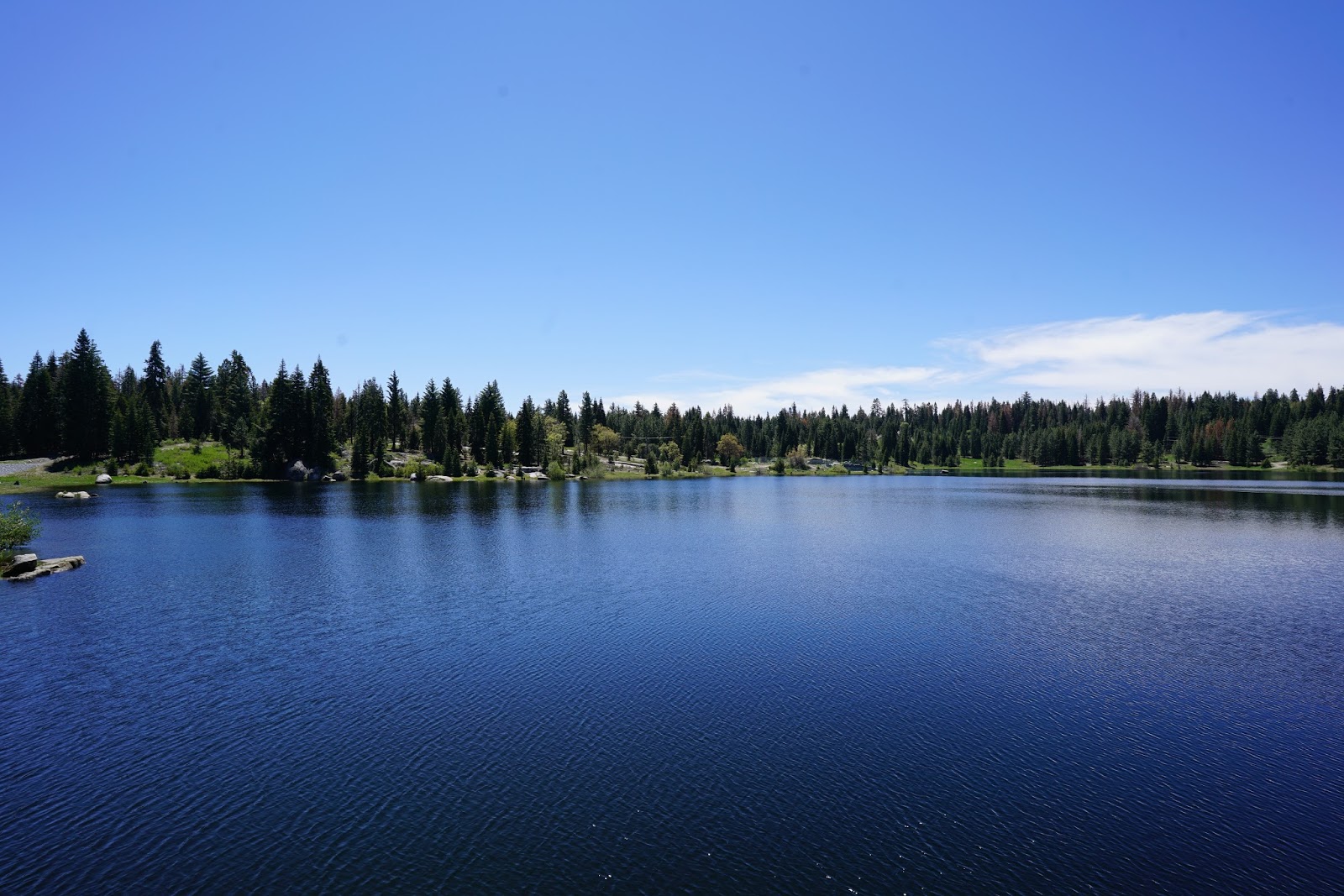
Every spring, I make a point of heading to the Balsam Forebay along highway 168 above Shaver Lake (first “snow park” on left) because there is at least one pair of nesting Ospreys. These large beautiful birds are also referred to as Fish Hawks and use the Forebay as their primary fishing grounds because it can be shallow as the water is drawn down to Shaver Lake to make electricity. I’ve written two previous articles on the Forebay. Summer http://midsierramusing.blogspot.com/2014/05/balsam-forebay-shaver-lake-ca.html
            The above articles provide additional particulars on the Forebay, which is also used by picnickers and fishermen. It is an easy walk on a trail of less than a mile through the woods from the parking area near Highway 168. This time I used my Sony A7R2 with an adapted Tamron 150-600mm lens, my Sony RX1R 35mm f2 and my new Zeiss Batis 18mm 2.8 lens.
            It was a warm day but cool in the shade at over 6,000’. As I approached the Forebay I saw a shadow move past me. I was happy to see it was an Osprey on its way to the nest, which helped me confirm where the nest was located. I found a cool spot in the shade where I could observe the nest and patiently waited for the nest visitations. I am uncertain if there were any young in the nest. When the adult Ospreys landed inside the large nest, they were no longer visible. It is only when they were on the edge of the nest that I could see and photograph them.   
            Overhead, the Ospreys are a beautiful bird to see. I also got a photograph of a Turkey Vulture. For most of the two hours I spent there, I only saw one Osprey but near the end, there were two pair (4) flying together. That is the most I have ever seen there.
            The shots were not easy and handheld. All Bird Photographs were with Tamron Lens.
 Zeiss Batis 18mm 
 Osprey Nest
 Osprey Has Stick For Nest Repair


 Zeiss Batis 18mm
 Forebay Dam Zeiss Batis 18m

 Telephoto Of Area Below Dam
 Nearby Mountains


Buzzard

Friday, June 3, 2016

Kaiser Pass Road And White Bark Vista 2016


Dale Matson

Click On Photographs To Enlarge
Huntington Lake From Kaiser Pass Road

For more particulars on this trip see my 2015 report here: http://midsierramusing.blogspot.com/2015/05/white-bark-vista-near-huntington-lake.html

The bad news this year was that the clouds and air were not as good as May 3rd last year. The good news this year is that I had to park at Kaiser Pass and hike into White Bark at the end of May. This means much more water will be available this year to a dry and thirsty California. There were places where the snow was still four feet deep on the one-mile section of dirt road from Kaiser Pass to the overlook. I was glad to have trekking poles to help as I slid down snow banks on the road. I needed to refer to the red trail markers in the trees periodically to avoid going off into the woods.

This year I used the A7R2, Zeiss Batis 85mm, Zeiss Batis 18mm and the Tamron 150-600 lens. I have enough photographs now with the Tamron for a future photo review of this lens.

The Zeiss Batis 85mm lens continues to amaze me with how consistently sharp it is. I sometime wonder if the nice 55mm 1.8 lens still has a place in my landscape photography. I will keep it. When I look at landscapes, it seems like the 85mm lens more accurately shows what I see in terms of size. Obviously my field of view is wider but the size of objects in my photographs is what I remember seeing. I did a few panoramas with the 85mm lens also.

The Batis 18mm was obviously not the lens for the vista since the mountains are distant. It was still fun to include it in my daypack and take a couple of photos with it also. The Tamron lens had the necessary reach and I still wonder what is one the other side of Edison Lake and just north of it. The distinctive rock pattern reminds me of Mt. Humphreys.

What a joy to see so much more snow in the Sierra Nevada and water in Shaver Lake, Huntington Lake and Edison Lake this year. There is much less evident shoreline.

This was a solitary time and as soon as the snow is off the dirt access road, the high clearance vehicles will drive all the way to the overlook. There are also campsites and places for RVs. A small lake (Deer Lake) is less than one half mile south of the dirt road for those who might want to fish also. If you continue walking south along the overlook, you will eventually see a sign for the infamous 30-mile Dusy Ershim Trail south to Courtright Reservoir. https://www.youtube.com/watch?v=V4U-OTVekVE
I have hiked part of it and think it would be harder to drive it in an OHV. There are lots of vehicle parts and hydraulic fluid stains on the boulders!

It was nice to sit with my back against a boulder and just gaze in between photographs and switching lenses. The air was cool but comfortable and in Fresno the temperature was in the mid 90’s. For those of you who are able to get to Kaiser Pass, this is probably the only time you will be by yourself once the snow melts.

  
Zeiss Batis 18mm
Batis 18mm
Zeiss Batis 18mm
Batis 85mm Rancharia Falls From Kaiser Pass Road
Batis 85mm Edison Lake
Tamron 150mm
Tamron 150mm
Tamron 150mm
Banner Peak 85mm
Tamron 150mm
Tamron 300mm
Tamron 600mm
Small Creek Flowing Under Kaiser Pass Road Batis 85mm
Batis 85mm
Snow Covering Dirt Access Road To Whitebark Overlook Red Trail Marker In Tree On Right
Batis 85mm
Batis 85mm
Batis 85mm
Batis 85mm
Batis 85mm 
 Batis 85mm
 Mt. Humphreys? Tamron 600mm
Mt Givens Radio Tower
Forebay
Tamron 150mm
Batis 85mm Panorama
Shaver Lake Batis 18mm